Gold chains may look similar from a distance, but their structure tells a different story when it comes to value. Different chain designs carry different weights, densities, and construction methods. Each one affects how much gold is in the piece and how easy it is to sell, repair, or melt down. As gold buyers in Saskatoon, we often assess these fine details to provide accurate payouts. While many sellers focus on karat and weight, chain style quietly plays a key role in how gold is valued.
Rope Chains: Why They Often Weigh More Than Expected
Rope chains stand out because of their twisted, woven pattern that looks like a real rope. This design includes many tiny links wrapped around each other in a spiral. Because of that, they often feel heavier in the hand. We regularly find that rope chains pack more actual gold per inch compared to simpler link types. Therefore, they may yield higher payouts despite looking modest in size.
Rope chains also resist tangling, which makes them a long-lasting design. But they are not easy to fix if they snap. That is to say, a broken rope chain usually needs full section replacement rather than a small repair. The density of these chains means more gold is required to replicate or repair them. So if you bring one in, it helps us understand that its weight includes less hollow space and more pure metal. Many rope designs also include soldered joints, making the chain even sturdier. On the flip side, if a rope chain is hollow inside, it affects value sharply. For this reason, we always inspect for any tell-tale signs of lightweight construction.
If you’re exploring how much your rope chain could be worth, take a look at our full guide on gold chains buyers in Saskatoon for a breakdown by type and density.
Figaro Chains: Appearance Over Weight in Most Cases
Figaro chains alternate between one long oval link and several smaller round links. This creates a nice pattern and often appeals to people for style more than substance. However, when we inspect them, we often notice something most sellers overlook. Figaro chains are usually lighter than they look. Their wide links give the impression of thickness, but in many cases, the actual gold content is on the lower end.
The open space in the pattern allows for visual presence without adding much mass. Consequently, they are less dense than a rope or box chain of the same length. This does not mean they are cheap or fake. It just means they carry less gold per inch, which lowers melt value during assessment. From our experience, Figaro chains can also be easier to repair than other styles. Their open links allow simple replacements if one section wears down or bends out of shape.
However, sellers need to know that a bent or dented Figaro link may not match exactly with replacement parts. That makes condition even more important when evaluating resale or gold value. If the chain is worn unevenly, it could reduce payout slightly due to repair requirements.
Cuban Link Chains: The Most Solid Design for Melt Value
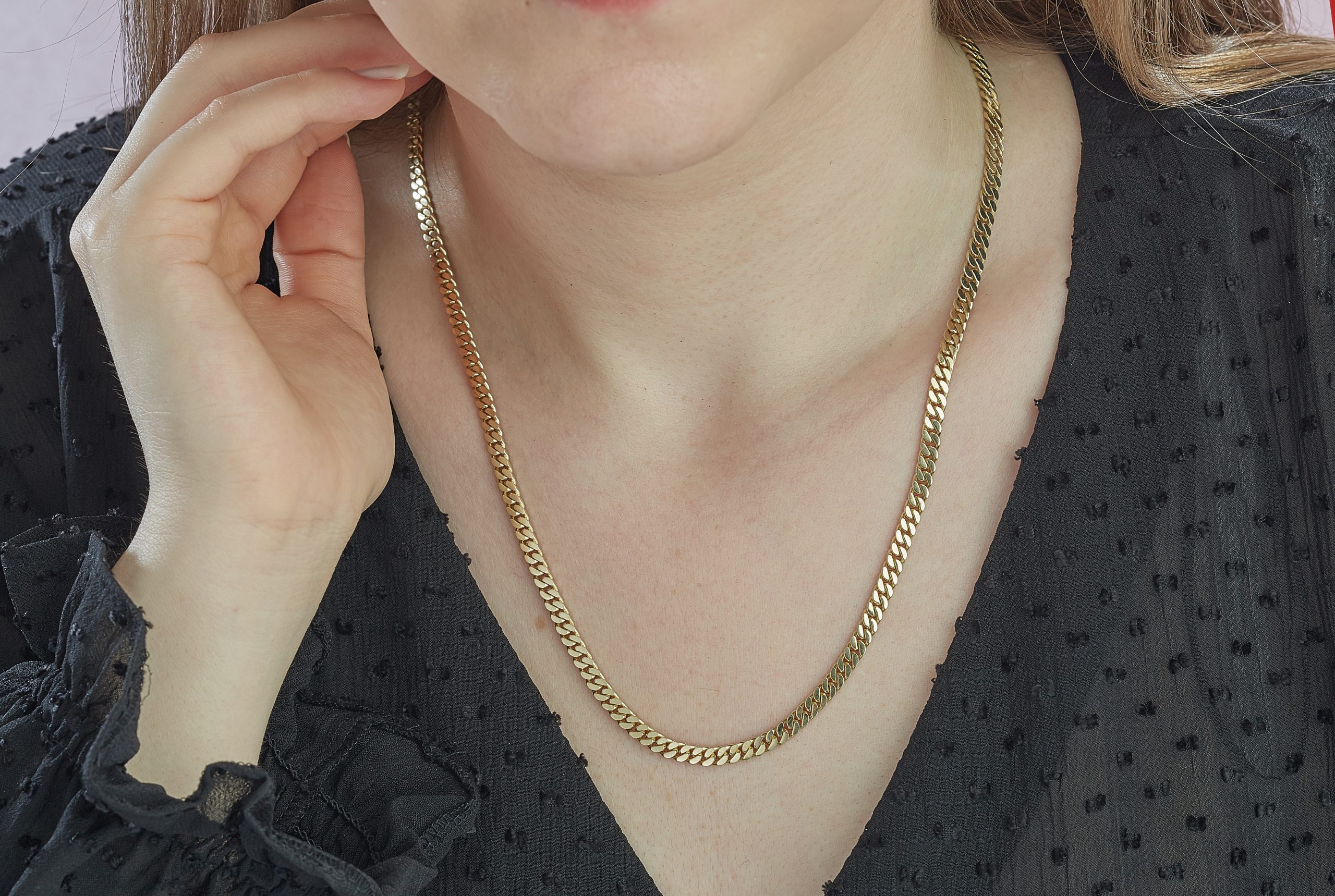
Cuban link chains have a flat, oval-shaped structure that is tightly woven. These chains are usually solid, not hollow, and they lay flat on the skin with a heavy, noticeable feel. What sets them apart is the uniform weight distribution across each link. That makes them excellent candidates for melting because the gold density is consistent throughout.
As gold buyers in Saskatoon, we often find that Cuban links provide some of the highest returns based on weight alone. Even short chains can bring substantial value due to their bulk and construction. They also age well because their thicker links do not bend or break as easily as others. Most importantly, these chains are rarely plated or filled, which adds to their value in gold purity tests.
If someone brings in a Cuban link, we look for clasp quality, solder marks, and any signs of wear. Even when slightly damaged, this style maintains strong payout potential because the loss in gold weight is minimal. We have also seen these chains passed down for generations without major loss in integrity. For those who want something solid and predictable, Cuban links remain the most dependable choice.
To learn more about how our process works when testing and valuing gold chains, visit our gold buyers in Saskatoon page for more detail.
Singapore, Box, and Snake Chains: Why They’re Tricky to Grade
Other styles like Singapore, box, or snake chains introduce more complexity. These chains often involve intricate twisting, tight grooves, or mechanical flexibility. On the surface, they look appealing and unique, but their inner construction varies widely. We often find hollow cores, extra joints, or thin link walls in these styles. This makes them more prone to denting and internal collapse over time.
Because of these design factors, Singapore and box chains are hard to repair once damaged. Snake chains, especially, do not respond well to tension or pressure. Even simple cleaning or untangling can cause bends. So while these may look elegant, their resale or melt value depends almost entirely on their condition and structure.
It’s also difficult to measure their actual gold content without cutting into the chain. The outer design may hide internal hollowness. For this reason, we often use density testing or x-ray scans when assessing high-end pieces in these styles. Most sellers are surprised when a heavy-looking snake chain weighs much less than expected.
If you’re unsure whether your chain’s condition affects its payout, feel free to contact our team for chain testing in Saskatoon. We’ll walk you through the process before you make any decision.
Solid vs Hollow Chain Styles: The Hidden Difference That Affects Price
Chain style does not just affect appearance. It changes how much real gold is inside. Two chains may look identical but weigh very differently if one is hollow. We often come across sellers who bought large, chunky chains that feel surprisingly light. These are often designed with a hollow core to save cost but still appear bold. In contrast, a solid version will feel heavier and have higher value during evaluation.
We always check for surface signs like thin edges or slight crumpling, which hint at a hollow interior. Sound can also help. A hollow chain often makes a lighter, ringing noise when tapped. A solid chain has a duller, denser sound. Because hollow styles can dent or collapse under pressure, their resale potential goes down even if the gold karat is high.
In our experience, people often assume gold purity is the only thing that matters. However, construction is just as important. Even high-karat chains bring limited value if the gold volume is low. A 22K hollow chain may hold less gold than a solid 14K one of the same length. That’s why knowing whether a chain is solid or not makes a real difference in the final payout.
Link Size and Chain Width: Bigger is Not Always More Valuable
It’s easy to think that a wide or thick chain equals higher value, but that is not always true. Width and size only help if the chain is solid. In many cases, manufacturers create wide links with thin walls to save material. This creates a bold look but includes less gold than a compact, dense chain with narrow links.
We also see oversized clasps or decorative ends that do not contain gold at all. These parts may be made of steel, brass, or plated metal, which does not add to value. That is why chain size needs to be compared with actual weight and karat. A chunky look can be misleading without proper testing.
When we weigh and measure a chain, we check whether the width matches the expected density. If there’s a mismatch, that often signals hollow construction. Sellers often bring in chains expecting high returns based on size alone. However, our payout depends on real gold content, not appearance. For that reason, style must be matched with testing before we can confirm value.
Chain Repairs and Wear: How They Affect Payout in Real Life
The condition of a chain affects more than just resale price. It changes how much gold remains intact. When a chain has been repaired several times or shows heavy wear, the gold weight may be uneven across its length. Some links might be thinner due to polishing or stretching, which lowers the melt value.
We often find repairs done with solder that includes other metals. This makes the gold less pure in those areas, affecting karat test results. In extreme cases, whole sections might be replaced with non-matching links that reduce the payout. Even surface scratches or bends can change how we value a chain.
That is why we always inspect wear patterns. If one side is more worn than the other, that tells us the chain may not be evenly weighted. Clasps also matter. A broken or replaced clasp that is not gold reduces the total payout. So when it comes to chains, damage is not just cosmetic. It shifts the total gold content, which is what we base our final offer on.
FAQ
What chain style usually has the most gold by weight?
Cuban link chains often have the most gold per inch because they are solid, dense, and tightly woven.
Can hollow gold chains still be valuable?
Yes, but they contain less gold overall. That means lower payouts compared to solid versions of the same style.
Why does my chain look big but feel light?
It’s likely hollow or made with wide links that have thin walls. Size alone does not equal higher gold content.
Do repairs or soldering affect the value of my gold chain?
They can, especially if non-gold materials were used during repair. This lowers both purity and total gold weight.
Is the clasp included when weighing the gold?
Only if it is made of the same karat gold. If it’s steel or another metal, we remove it from the total weight before payout.